
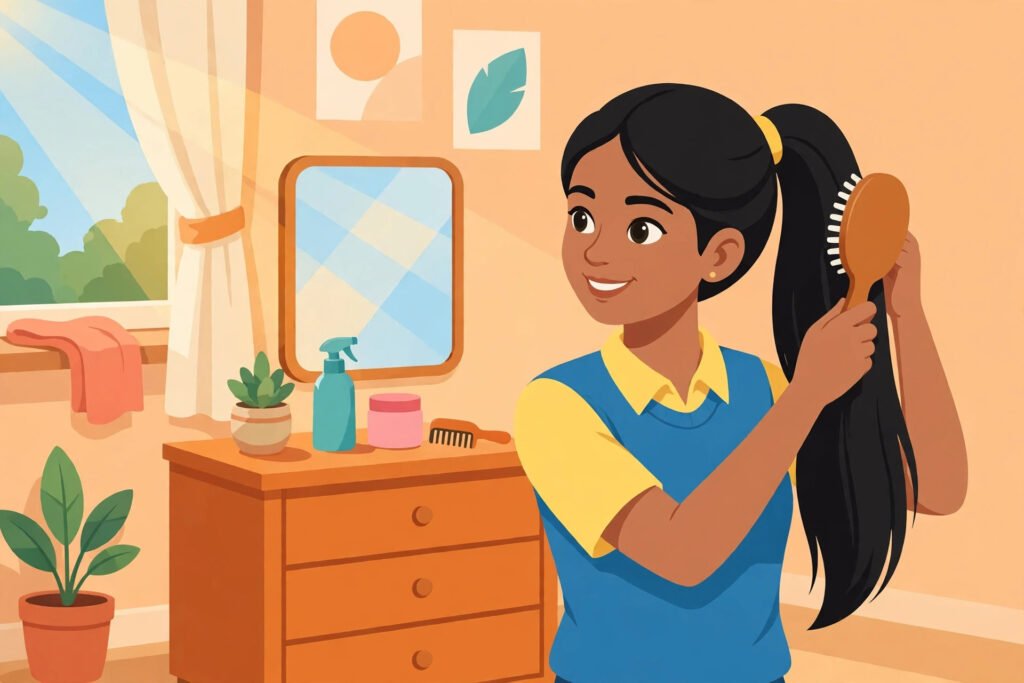
Priya stood in the bright drugstore aisle. Her long black ponytail swung behind her. She held ten dollars in her fist. The shelf held masks, oils, and sprays. Each jar cost more than her cash. Each label promised soft, shiny hair fast. She sighed and set one jar back. Her ends still felt dry and rough.
Her older sister leaned in and grinned. “You don’t need all that stuff,” she said. “You don’t need a rich girl’s shelf.” Priya laughed, but she felt doubtful. Her hair frizzed up on humid days. Her ends snapped when she brushed them. She didn’t think cheap care could help.
That night, her sister grabbed a notebook. They wrote a small, simple plan together. No fancy haul. No ten step routine. Just smart basics and free habits. Priya tried it for one full month. Her ponytail felt softer by week two. It looked calmer by week four. That’s how to take care of your hair on a small budget. It’s not luck. It’s not magic jars. It’s learning how to take care of your hair on a small budget with what you’ve got.
The Short Answer

Here’s the short, honest answer first. You don’t need lots of pricey products. You need three plain basics that fit. You need gentle hands and smart habits. That’s really it for most teens.
Buy shampoo for your scalp only. Buy conditioner for your lengths and ends. Add one leave in if you’re dry. Then stop shopping for a while. Don’t chase every ad you see. Don’t copy every routine you watch.
Wash a bit less if you can. Brush gently, from the ends up. Sleep with your hair in a braid. Keep tight styles loose and soft. Those free steps do heavy work. They save length. They calm frizz. They don’t cost you one cent.
Priya’s big lesson was super simple. Soft hair isn’t bought in one trip. It’s built in small daily choices. That’s how to take care of your hair on a small budget in real life. You use less, but you use it well.
If you’re also working on feeling good bare faced, our guide on how to feel pretty without makeup fits this same simple idea.
So keep your goal small and kind. You don’t need salon hair each day. You need hair that feels healthy. You need a routine you can afford. And you need steps you’ll actually do. When a plan fits your life, you’ll stick with it. That’s when how to take care of your hair on a small budget starts to feel easy.
Know Your Hair Type Before You Buy Anything

Don’t buy a thing before you look. Your hair type tells you what’s needed. It also tells you what isn’t. That one check saves real money.
Start in good light after a wash. Let your hair dry on its own. Don’t add oils or creams yet. Watch how it falls and feels. Does it lie flat and straight? Does it bend in loose waves? Does it spring into clear curls? Or does it coil tight and small?
Straight hair gets oily quite fast. It often looks flat at the roots. Wavy hair bends and frizzes easily. Curly hair tends to feel drier. Coily hair needs the most moisture. It also breaks if you’re too rough.
Now check your strands themselves. Rub one strand between your fingers. Fine hair feels thin and silky. Thick hair feels strong and full. Fine hair gets weighed down fast. Heavy creams can make it limp. Thick hair can drink more conditioner. It won’t get flat as quickly.
Priya thought her hair was just bad. It wasn’t bad at all, turns out. Her hair is thick and wavy. She’d used a rich curl cream daily. It was way too heavy for her. Her ponytail looked dull and greasy. Once she quit it, things changed. Her waves looked light again fast.
Don’t copy a friend’s routine blindly. Your friend’s hair isn’t your hair. Her fine, straight hair needs less. Your thick curls may need more. A product can flop for you. That doesn’t mean it’s junk. It just means it wasn’t your match. Knowing that saves you cash and stress.
Do one free test this week. Wash your hair like normal. Use just shampoo and conditioner once. Skip all the extra styling stuff. Watch your hair for two days. Write down what you notice nightly. Your notes are your shopping list. They’ll tell you what you lack. They’ll stop you buying random bottles.
That’s step one, and it’s free. Know your type before you spend. It’s the smart base for how to take care of your hair on a small budget. And it’s why how to take care of your hair on a small budget starts in a mirror, not a store.
The Only Three Products Most Teens Really Need

Let’s cut the shelf down to three. That’s all most teens really need. Shampoo, conditioner, and one extra helper. If you’ve got those three covered, you’re set.
First, you need a gentle shampoo. Its job is just your scalp. It lifts oil, sweat, and dust. It shouldn’t leave your hair squeaky. Squeaky hair is stripped hair, usually. Pick a plain drugstore bottle instead. Cheap and mild beats fancy and harsh.
Don’t wash your lengths with shampoo. They don’t get that dirty, honestly. The rinse will clean them enough. Shampoo on ends just dries them. Dry ends tangle, split, and snap. You don’t want that trade at all.
Second, you need a good conditioner. This is your real softness hero. It smooths your lengths and ends. It makes detangling much less painful. Use a blob the size of a grape. Work it from mid length down. Don’t put it on your scalp. That can make roots look greasy.
Let conditioner sit a few minutes. Comb it through with your fingers. Or use a wide tooth comb gently. Then rinse with cool-ish water. Your hair should feel slippery soft. It shouldn’t feel coated or heavy.
Third comes one helper, if needed. Dry or curly hair may want it. Pick a light leave in spray. Or pick a cheap, simple oil. Use a tiny pea sized drop. Rub it between your palms first. Smooth it over your ends only. Don’t pour it near your roots. A little goes a long, long way.
Fine or oily hair may skip it. You don’t need a helper daily. Maybe you just use it weekly. Or just on super dry days. Let your hair tell you when. If it feels soft, skip it. If it feels straw like, add it.
Priya set three bottles on her shelf. Just three, in a neat row. She didn’t feel stressed looking anymore. She knew what each one did. She knew when to use each. Her cash stopped leaking away slowly. That’s a big part of how to take care of your hair on a small budget.
Don’t buy backups you won’t use. Don’t stock two shampoos at once. Finish one bottle before you switch. Use each product for three weeks. Then judge it with honest eyes. Cheap stuff that works is gold. Don’t let ads talk you out.
What about masks and fancy treatments? They’re extras, not daily must haves. You can skip them for now. A good conditioner, used well, does plenty. The folks at Nemours KidsHealth back simple care in their guide to better skin without pricey products, and hair works much the same way. That’s how to take care of your hair on a small budget without a bathroom full of half used bottles.
Washing Less Often and Washing Better

You may be washing too often. Lots of teens wash each day. It’s habit, not real need. Daily washing can dry your ends. Then you buy more stuff to fix dryness. It’s a loop that costs money.
Try stretching your washes a bit. Wash every second day first. See how your scalp feels then. Curly and coily hair can wait longer. Some girls wash once a week. Straight, fine hair gets oily faster. You might need every other day. There’s no one right number here. Your scalp gives you the answer.
Don’t panic about day two hair. It won’t look as fresh, sure. But it shouldn’t look greasy either. Tie it up in a braid. Try a bun or ponytail. Day two styles hide oily roots well. Priya lived in braids on day two. Nobody knew, and she looked cute.
When you do wash, wash better. Get your hair fully wet first. Use warm water, not hot water. Hot water can dry your scalp. Put shampoo in your palms first. Rub them together, then go in. Focus all the scrubbing on your scalp. Use your fingertips, not your nails. Nails can scratch and hurt skin.
Scrub for a full slow minute. Most girls rinse way too fast. Give the shampoo time to work. Then rinse till the water runs clear. Don’t rush this part at all. Leftover shampoo can make hair dull. It can make your scalp itchy too.
Next, squeeze out extra water gently. Don’t wring your hair like a cloth. Add conditioner to lengths and ends. Keep it off your scalp completely. Let it sit while you wash your body. That’s a free timer that works. Then rinse it out well.
Don’t pile wet hair on your head. Don’t rub it hard with a towel. Rubbing roughs up the surface fast. That roughness looks like frizz later. Pat and squeeze with a soft towel. An old cotton tee works even better. It’s gentler, and it’s already yours.
Let your hair air dry when you can. Heat tools cost cash and cause damage. If you blow dry, use cool air. Keep the dryer moving, not stuck still. Give your hair heat free days too. It’ll thank you with less breakage.
Washing less saves shampoo and conditioner. It saves time in the morning too. And it keeps your natural oils working. Those oils are free conditioner, basically. That’s why washing well sits at the heart of how to take care of your hair on a small budget. And it’s proof that how to take care of your hair on a small budget isn’t about more washes. It’s about better ones.
Free Habits That Prevent Breakage and Frizz

Most breakage comes from rough handling. It doesn’t come from missing products. That’s great news for your wallet. Gentle hands are fully free.
Detangle in the right order always. Start at your ends, not roots. Hold the section above your knot. Work the knot out slowly below. Move up a bit at a time. Don’t yank a brush straight down. Yanking snaps weak strands in seconds. Priya used to rip her brush through. She found broken hairs on her shirt. Now she goes slow and gentle. Her brush comes out much cleaner.
Pick the right tool for detangling. Use your fingers for big knots. Use a wide tooth comb after. Brush dry curls only with care. Dry brushing can puff curls up. It can turn curls into frizz fast. Many curly girls detangle when wet. They do it with conditioner in. That slip makes knots melt away.
Watch your hair ties as well. Ties with metal bits catch hair. They snag and snap small strands. Pick soft ties with no metal. Don’t tie them super tight either. Tight ties pull at your roots. That pull can hurt and break hair. If a style gives you a headache, redo it. Pain isn’t a beauty tax you owe.
Change how you sleep on hair. Loose hair rubs on your pillow. It tangles while you toss around. Put it in a loose braid. Or twist it in a soft bun. Priya braids hers each night now. She wakes up with calmer waves. She doesn’t fight knots at dawn anymore.
Your pillowcase matters more than you’d think. Rough cotton can drag on hair. A smooth case drags much less. You don’t need a fancy silk one. A cheap smooth case works fine. Or flip your case inside out. The smoother side faces your hair then. Wash your case each week too. Oil and grime build up fast.
Heat is another quiet hair breaker. Straighteners and curlers can scorch ends. You don’t have to quit them forever. Just don’t use them each day. Save heat for special days only. Use the lowest heat that works. And don’t pass it over and over. One slow pass beats five fast ones. Burnt ends can’t be fixed later. They can only be cut off.
These habits don’t look like much. They’re small, quiet, and kind of boring. But they save the length you’ve grown. Hair you don’t break stays longer. You won’t need pricey repair masks then. That’s the secret inside how to take care of your hair on a small budget. Protection is wealth here, truly. And you’ll see why how to take care of your hair on a small budget loves free habits most. They work each day while you spend nothing.
Simple Protective Styles That Cost Nothing

A good style can protect your hair. It can also look super cute. You don’t need pins or sprays galore. You need five minutes and your hands.
Start with the classic low braid. It’s soft on your roots. It keeps ends tucked and safe. It works for school, sports, and sleep. Dress it up with a bright tie. Priya wears hers with a red scrunchie. Her bright tops match her fun vibe. She gets kind words on it often.
Try a low, loose ponytail too. It’s Priya’s main look for school. Move its spot from day to day. High one day, low the next. That stops stress on one spot. Don’t pull the front too tight. Leave a bit of softness there. Your edges will stay much happier.
A soft bun is great on day three. Twist your hair up loosely. Pin it with what you’ve got. Bobby pins from home are fine. It hides oily roots like magic. It also keeps ends off your clothes. Less rubbing means less frizz later. Add a bright clip if you like. One clip can lift the whole look.
Two braids are cute and practical. They split the stress in half. They keep hair off your neck. They’re great on hot, busy days. They also give soft waves later. Undo them for an evening out. You’ve got waves with zero heat. That’s two styles for one effort.
Twists work well for curly hair. Twist small sections and pin them back. Or do two big flat twists. They keep curls neat and stretched. They don’t need gel to look good. Your own texture does the work. Add a scarf if you own one. A scarf adds color for free.
Rotate your styles through the week. Don’t wear one style seven days straight. Same spot stress causes weak points. Weak points snap when you brush.
Need ideas for looking neat at school? Our guide on how to look prettier at school shares that same neat, simple spirit. It pairs well with these styles.
Learn styles from free videos at home. Practice once on a calm weekend. Don’t try a new style rushed. School mornings aren’t the time to learn. Give yourself ten slow practice minutes. Your hands will learn super fast. By week two, you’ll braid without looking. That’s a skill you’ll keep for years.
Styles are where cheap care gets fun. You’re not just saving your hair. You’re playing with your own look. That’s how to take care of your hair on a small budget with real creativity. And it’s more proof that how to take care of your hair on a small budget needs your hands, not your wallet.
Trimming, Treating, and DIY Care Safely at Home

Let’s talk trims and home treatments. They can save you real cash. But they need care and honesty. Don’t rush them, and don’t wing them.
First, let’s be clear on trims. A trim just dusts off split ends. It doesn’t make hair grow faster. Hair grows up at your scalp. A trim keeps ends from splitting higher. If splits climb up, hair breaks. Then you lose length you wanted. Small trims protect your length well.
Look for splits in good light. Ends may look thin and wispy. Single strands may fork like tiny trees. Hair may tangle at the ends only. Those are signs a trim helps. Most teens need one every few months. You don’t need one each month. Don’t trim just because you’re bored.
Safety comes first with any scissors. Don’t trim your hair alone, please. Ask a steady adult to help you. Or let an older sister help. Sit still, in bright light. Use clean, sharp hair scissors only. Kitchen scissors are dull and jagged. They can crush ends and cause splits. If you don’t have proper scissors, wait. A late trim beats a bad trim.
Only cut a tiny bit off. Think dust, not a new style. Cut straight across small sections slowly. Don’t try layers or a big reshape. That’s a salon level job, truly. If you feel unsure, just stop. You can always cut more later. You can’t stick hair back on.
Now for simple DIY treatments at home. Keep them plain and food based. A mashed banana mask can soften. Plain yogurt can feel soothing too. A bit of honey can add shine. These are cheap and in most kitchens. Priya and her sister tried banana once. They laughed the whole messy time. Her hair did feel softer after.
But DIY isn’t risk free, okay? Always patch test a new mix first. Put a dab behind your ear. Wait a day and watch closely. If it itches or turns red, skip it. Don’t put it on broken skin. Don’t use strong stuff like lemon juice. Lemon can dry and burn skin. Baking soda can be harsh too. If a tip sounds extreme online, skip it. Gentle is the rule in this house.
Keep everything clean when you mix. Use a clean bowl and spoon. Make just enough for one use. Don’t store leftovers for next week. Rinse masks out really well after. Bits left in hair look like flakes. They can also itch by evening. Wash with shampoo after a mask. Your scalp should feel fresh, not coated.
Home care works when it stays simple. Trim a bit, with help nearby. Test a mask, then watch closely. That’s how to take care of your hair on a small budget in your own kitchen. And it’s why how to take care of your hair on a small budget puts safety before savings, every time.
When a Salon Visit Is Actually Worth It

You don’t need a salon each month. But some jobs are worth saving for. A pro cut is one of them. So is fixing a big hair mistake. Spend rarely, but spend on purpose.
Save for a proper reshape cut. If your hair has lost its shape, go. If one side sits much longer, go. A pro sees the back clearly. You can’t see it well yourself. One good cut can last months. It can make cheap care look great. Priya saved coins in a small jar. She booked one careful cut in spring. Her ponytail looked neat for ages after. She didn’t need pricey products after that.
Save for help with home dye gone wrong. Don’t pile more dye on top fast. That can wreck your hair badly. A pro can fix color safely. It costs more than a box dye. But it costs less than months of damage. If you’re not sure, ask first. Many salons will chat for free.
Go if your scalp won’t calm down. Itching that won’t quit needs a look. Flakes plus red, sore skin too. Don’t keep buying new shampoos in hope. A doctor or salon pro can help. Your scalp health isn’t a small thing. It affects how your hair grows. Ask a parent to help you book. You don’t have to handle it alone.
Between visits, let free habits work. Braid at night, wash gently, trim carefully. Those steps hold your cut’s shape. They stretch the weeks between visits. That’s smart spending, not cheap skipping.
Don’t feel bad about salon visits either. Cheap care isn’t no care ever. It’s care that fits your life. Some girls go twice a year. Some go once and trim at home. Both plans can work just fine. Pick the one your family can manage. Talk it over at home first. A calm plan beats a rushed splurge.
So here’s your big picture plan. Learn your type, buy three basics. Wash less, but wash much better. Use free habits and free styles daily. Trim and treat with care at home. Save the salon for big jobs only. That’s how to take care of your hair on a small budget from start to finish. It’s also how to take care of your hair on a small budget without stress or guilt. And if you remember one line, remember this. How to take care of your hair on a small budget is mostly free habits, done with love.
Frequently Asked Questions
How often should I really wash my hair?
It depends on your own scalp. Fine, straight hair gets oily fast. You may need to wash every other day. Wavy hair often does well twice weekly. Curly or coily hair may need once weekly. Watch how your scalp feels daily. If it itches and looks greasy, wash it. If it feels calm and dry, wait. Don’t copy a friend’s wash days blindly. Your head will tell you its rhythm. Start with one less wash weekly. See how it goes for two weeks.
Can I use the same shampoo as my family?
Yes, you often can, and it’s smart. Big family bottles cost less per wash. If your scalp feels calm after, keep it. If your hair detangles easily, keep it. Problems show up in clear ways though. A strong shampoo may dry your ends. A heavy one may flatten fine hair. Try tricks before you buy your own. Shampoo your scalp only, not lengths. Condition your ends a bit longer. Wash one day less each week. Those tweaks may fix it for free.
What is the cheapest way to reduce frizz?
Start with your hands, not a product. Frizz loves rough towels and hard brushing. Squeeze water out gently after washing. Don’t rub your hair dry at all. Detangle while conditioner is still in. Then leave it alone while it dries. Touching wet hair makes frizz worse fast. Sleep in a loose braid at night. Use a pea sized drop of oil. Put it just on your ends only. Most frizz fixes cost zero dollars. They’re habits, and you’ve got them now.
Are expensive products ever worth buying?
Sometimes, but not as often as ads claim. One good product can be worth saving for. That’s true if it solves your exact problem. A conditioner your hair loves counts here. But don’t buy five hopeful bottles at once. Change one thing at a time only. Use it for three full weeks. Judge it by feel, not by hype. If a cheap one works just as well, stay loyal. Your wallet will thank you later. Evidence should always beat pretty packaging.
How can I make my hair grow faster on a budget?
You can’t speed growth much, honestly. Hair grows at its own steady pace. No cheap product changes that pace a lot. But you can stop losing length daily. That’s where the real gain is hiding. Detangle gently and trim splits on time. Sleep in a braid, eat real meals. Think of it as saving, not earning. Each month with less breakage adds up. Over a school year, you’ll keep real length. That is how to take care of your hair on a small budget paying off in length you keep.