
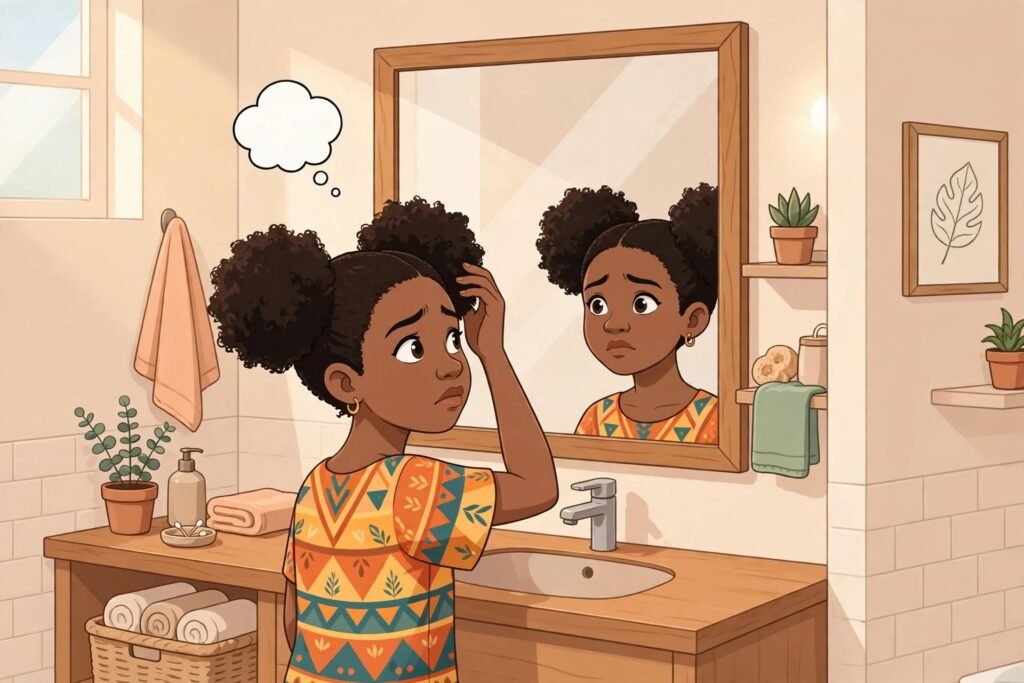
It takes one sentence. That’s all. A friend glances at your new haircut and says, “Oh, you changed it.” A teacher sighs, “We went over this already.” Your cousin laughs, “You always take so long.” None of these are attacks. Nobody raised their voice. And yet the words follow you home, sit with you at dinner, and replay while you brush your teeth. If that sounds like your life, you’ve asked the question: how can i stop being so sensitive to remarks that were probably nothing?
Let’s get one thing straight before anything else. You’re not asking because you’re weak. You’re asking because remarks land on you like stones while they seem to bounce off everyone else, and you’re tired of bleeding over pebbles. That’s a fair thing to be tired of. And it’s a skill thing, not a worth thing. Skills can be learned.
Here’s the shape of this guide. First, why one small remark can replay in your head all day. Then the truth that most remarks aren’t about you at all. Then the two tools that change everything: a tiny pause, and a quick check of what was really meant. You’ll also get calm answers you can borrow word for word. Because how can i stop being so sensitive to remarks is really two questions. How do I hurt less on the inside? And how do I answer better on the outside? This guide covers both.
By the end, you’ll also know when a remark isn’t a remark at all, but mockery wearing a costume, and what to do then. That line matters. Less sensitive should never mean easier to walk on.
The Short Answer

Here’s the short answer. A remark lands hard when it hits something you already worry about. The comment about your hair stings because you were already unsure about your hair. The comment about being slow stings because you already fear you’re a burden. The remark is small. The sore spot under it is what makes it echo. That’s the first key to how can i stop being so sensitive to remarks: the remark isn’t the whole story. It just pressed a bruise you already had.
The second key is speed. Remarks hurt most in the first seconds, when your feelings answer before your brain can check the facts. If you can stretch those seconds, even a little, the sting loses half its power. Pause first. Feel second. Answer third. That order changes everything.
And the third key is this. Most remarks are weather reports about the person who said them. Their mood, their rush, their habits, their own bruises. Very few are careful verdicts about you. When you learn to hear a remark as information about the speaker’s day, not a judgment of your worth, the replay gets quieter on its own.
So how can i stop being so sensitive to remarks? You soften the bruise, you slow the first seconds, and you stop treating every comment like a court ruling. None of that asks you to become a colder girl. It asks you to become a steadier one, and steadier is very learnable. The rest of this guide walks you through it, remark by remark.
Why One Small Remark Can Replay All Day

Let’s watch a remark do its damage in slow motion, because the replay has parts. Part one: the words land. “You always take so long.” Part two: your brain tags the moment as important. It bookmarks it with a hot little flag that says, think about this again later. Part three: later comes, again and again. In the shower, you hear the tone again. On the bus, you remember your face heating up. At night, you compose the reply you wish you’d said.
Why does your brain bookmark such a tiny moment? Because it thinks remarks are data about your place in the group. Among friends, among classmates, your place feels precious and fragile at the same time. So your mind collects every comment like a clue. Did that clue say I’m liked, or did it say I’m a problem? A brain on clue duty does not let remarks go. It files them, cross checks them, and brings them back for review. That filing habit is the engine behind how can i stop being so sensitive to remarks being such a hard question. The remarks end. The filing doesn’t.
There’s also the surprise factor. A remark you expect slides off. A remark from nowhere hits bare skin. Your friend is sweet ninety nine times, so the one flat comment shocks your system more than it should. The shock gets mistaken for importance. If it shocked me, it must be true and big. Not so. Shock is just surprise wearing a scary mask.
And let’s be fair to your past. If you’ve been teased before, really teased, your ears are trained. They scan every comment for the hidden jab, because once upon a time the jab was really there. That’s not you being fragile. That’s you being trained by experience. Trained ears can be retrained, slowly and kindly. The sections ahead are that retraining, one small habit at a time.
So when a remark replays for the tenth time today, don’t ask what’s wrong with you. Ask which part is running. The bookmark? The clue hunt? The old training? Naming the part turns a flood into a list. And lists can be handled. That’s the first step out of how can i stop being so sensitive to remarks being a daily mystery. It’s not a mystery. It’s a mechanism, and mechanisms can be worked with.
Most Remarks Are Not About You at All

Here’s a truth that frees a lot of girls. Most remarks are about the speaker’s day, mood, and habits. Barely about you. People talk the way weather happens. Fast, unplanned, and shaped by pressure you can’t see.
Think of the teacher who sighed, “We went over this already.” That sigh was probably about a long day, a class behind schedule, and a headache. You were just the person standing there when it came out. Or the friend who said your haircut was “different.” She might say that about every change, because change makes her awkward, not because your hair looks bad. Or your cousin and the “you always take so long” line. Some people tease the way other people breathe. It’s their family language, not your report card.
A useful trick is to give every remark a quick source check. Ask: what was happening for them right then? Were they rushed, tired, showing off for someone, repeating what gets said to them at home? Nine times out of ten, you’ll find a source that has nothing to do with your worth. The remark gets smaller the second you see where it actually came from. Half of answering how can i stop being so sensitive to remarks is that one source check.
There’s a deeper layer too. People often remark on the exact thing they’re insecure about themselves. The girl who comments on everyone’s weight is at war with her own mirror. The boy who mocks slow answers is terrified of looking dumb. Remarks are often confessions in disguise. Hearing them that way doesn’t excuse rudeness. But it does move the remark from your file to theirs, where it belongs.
Does this mean you should never take a remark seriously? No. The next sections cover checking what’s true and answering what’s real. But start from this base: most remarks are weather, not verdicts. When you ask how can i stop being so sensitive to remarks, this base is half the answer. Stop standing in every stranger’s storm like it was aimed at you. Most of it is just rain, and rain passes over everyone.
Keep one more picture in mind. If a hundred people heard the same remark, they’d hear a hundred different things. One laughs. One shrugs. One stings. The words are identical. The ears are different. Your ears are yours, and they can learn to hear the rain as rain. That’s not pretending. That’s seeing clearly. And seeing clearly is the whole game of how can i stop being so sensitive to remarks.
The Three Second Pause Before a Comment Sinks In

Now the tools. Tool one is tiny and mighty: the three second pause. When a remark lands, your feelings want to answer in half a second. Tears, heat, a sharp reply, a fake laugh. All of those are first draft feelings. The pause lets the second draft arrive, and the second draft is almost always calmer and smarter.
Here’s how it works in real life. The remark lands. You breathe out slowly, like you’re cooling hot cocoa. You let your face stay still. You say nothing yet. Three seconds. That’s all. Inside those seconds, one question runs: what did they actually say? Not what it felt like. What were the plain words? Plain words are almost always smaller than the feeling they dragged in.
The pause does three jobs at once. It stops you from answering with a flooded brain. It gives the speaker a chance to soften or clarify, which people often do when they see a calm face instead of a flinch. And it sends your own brain a message: we are not in danger, we have time. That message alone lowers the sting. Girls who practice this say it’s the moment how can i stop being so sensitive to remarks stopped being theory and started being real. Three seconds. That’s the door.
Practice it on tiny remarks first. The low stakes ones. A sibling’s teasing about your music. A friend’s flat “okay.” Build the pause where the price of failing is small. Then, when a remark lands in a bigger moment, in front of people, the habit is already there, like a railing your hand finds in the dark.
What if the tears come anyway inside the pause? Then they come. A pause is not a dam. It’s a breath. You can still cry, still feel it, still care. The pause just makes sure you also get a choice about what happens next. Feeling plus choice is the whole upgrade. Before, the remark decided your next ten minutes. After the pause, you do.
So keep it simple. Remark lands. Breathe out. Plain words check. Then respond, or don’t. That tiny gap is where your power lives. And like any power, it grows every time you use it. You’ll be amazed how often girls who ask how can i stop being so sensitive to remarks find that the answer starts with just not answering yet.
Check What Was Really Meant Before You Believe the Worst

Tool two is the meaning check. After the pause, before the replay starts, ask one calm question: what did they most likely mean? Not the scariest meaning. The most likely one. Your worried brain always applies for the job of interpreter, and it always casts the villain. This tool hires a fairer interpreter.
Run the check like this. Step one: the plain words. “You changed your hair.” Step two: the possible meanings, all of them, out loud in your head. She noticed a change. She likes it but said it badly. She hates it. She’s jealous. She’s just making conversation. Step three: pick the most likely one based on who this person is and how they treat you the rest of the time. A kind friend of two years gets the kind reading. That’s not naive. That’s math.
Context is evidence too. Was the remark said fast, in passing, while she was looking at her phone? Then it’s a low effort comment, and low effort comments deserve low weight. Was it said slowly, to your face, in front of an audience? That carries more signal, and section six covers that case. Match the weight of your worry to the weight of the moment. Most of how can i stop being so sensitive to remarks is learning exactly that match. Most girls who ask how can i stop being so sensitive to remarks are giving passing comments the weight of speeches. Rebalancing that fixes more than you’d think.
And when you truly can’t tell, you have a power move: ask. Not with tears or heat, just plain. “Hey, when you said my hair looks different, did you mean it in a good way?” Most people light up and clarify at once. “Good way! It suits you.” Loop closed in five seconds, instead of five hours of replay. Asking feels brave the first time. By the third time, it feels like a superpower. Half of learning how can i stop being so sensitive to remarks is learning that you’re allowed to check instead of guess.
One warning about the check. Don’t run it fifty times. Checking once, calmly, is a tool. Checking all evening is just the replay wearing a lab coat. One check, one likely meaning, one decision: answer it, file it, or drop it. Then let the topic close. If your brain reopens it at midnight, remind it the case is closed. You already did the work. The court is not in session anymore.
This is the deep shift, so let it land. Before, a remark arrived and your feelings graded it instantly, in the dark, at their worst. Now, a remark arrives, you pause, you check, and then you grade it, in daylight, at your fairest. Same ears. Same heart. Totally different verdicts. That’s how can i stop being so sensitive to remarks in practice. Not thicker skin. Fairer trials.
Simple Ways to Answer a Remark With Calm

Sometimes silence isn’t what you want. Sometimes a remark deserves an answer, and having the words ready is what keeps you steady. Here are calm answers you can borrow word for word. Short is strong. You don’t need a speech. You need one clean line and a level voice.
For the vague remark, the one that might be nothing: “What do you mean?” Said calmly, with a small smile. It hands the remark back to its owner. Half the time they soften it themselves. “Oh, nothing bad, just noticed.” The other half, they reveal what they really meant, and then you know what you’re actually dealing with. Either way, you stop guessing. Girls who ask how can i stop being so sensitive to remarks often find this tiny question does more than weeks of replaying ever did.
For the teasing remark from a friend: “Careful, that one actually stings.” Honest, light, no drama. Real friends adjust on the spot. You’ve given them a chance to be kind without making it a war. If they tease again right after, that’s data, and section six is about data like that.
For the remark about your looks or body: “I’m happy with it.” Then change the topic or walk on. You don’t owe anyone a debate about your own face. A calm “I’m happy with it” ends ninety percent of these. It says the remark found no bruise to press, even if it did. Fake it steady and it starts to feel steady.
For the public remark, the one with an audience: answer the words, not the crowd. Keep it short, keep it boring. “Noted.” Or a small laugh and a topic change. Audiences forget fast when there’s nothing juicy to watch. Your calm becomes the story instead of your hurt. And if it was truly cruel, you can handle it later, in private, where you have power. Not every answer has to happen in the moment it lands.
Health and communication guides back this up. Being clear and direct, without attacking back, is a real skill with a name. The TeensHealth guide to assertiveness explains how to say what you feel and need in a firm, calm way that people can actually hear. If answers are your weak spot, that page is a kind coach. Because in the end, how can i stop being so sensitive to remarks is partly this: trust that you can answer. A girl who trusts her answers fears the remarks less. The words stop feeling like verdicts when you know you can talk back to them.
When a Remark Crosses the Line Into Mockery

Now the line. Because some of what lands on you isn’t a remark at all. It’s mockery, and mockery is a different animal. You should not train yourself to absorb it calmly. You should name it and deal with it. None of this section is really about how can i stop being so sensitive to remarks, because mockery is not a sensitivity problem.
Here’s how to tell. A remark is usually once, clumsy, and about a thing. Mockery repeats. It aims at the same sore spot again and again. It loves an audience. It doesn’t stop when you show it hurts, it speeds up. And afterward, you don’t feel stung for an hour. You feel smaller for days. When the pattern looks like that, your sensitivity isn’t the problem in the room. The behavior is.
For real mockery at school, you deserve backup and a plan, and there’s a full guide on how to react when someone makes fun of you at school that walks through it step by step. And for the public put down version, the one done in front of everyone on purpose, read how to respond when a girl puts you down in front of everyone. Those are battle plans for the real thing. This article is about the everyday pebbles. Know which one you’re holding.
And if the mockery comes from someone close, a friend, that’s the hardest case. Use the data rule. One clear, calm talk: “These jokes hurt me. I need them to stop.” Then watch what she does, not what she says. A friend who stops is a friend. A friend who calls you sensitive and keeps going has answered your question about the friendship. Believe her answer, and lean on the people and adults who treat you well. You can be less sensitive to remarks and still refuse to be someone’s target. Both. Always both.
You Can Stay Soft and Still Grow Thicker Skin

Let’s land this where it should land. Thicker skin was never about becoming hard. A hard girl feels nothing, answers everything with a wall, and misses half her life. That’s not the goal. The goal is a soft heart with a steadier door. Things still get in. You just choose what stays.
Look at what you have now. You know why remarks replay: the bookmark, the clue hunt, the old training. You know most remarks are weather from someone else’s day. You have the pause, the meaning check, and a pocket of calm answers. And you know where the line to mockery sits, so your softness never gets used against you. That is a full set of tools, built from one honest question: how can i stop being so sensitive to remarks without losing the parts of me I like?
Keep the parts you like on purpose. Your sensitivity is also your kindness radar. It’s why you notice the quiet girl, hear the wobble in a voice, and say the right thing at the right time. The world does not need you blunter. It needs you steady, so your gift stops costing you so much. Steady and soft is a rare combo. It’s worth building.
Progress will look small from inside. A remark that used to take your whole day now takes your whole hour. Then twenty minutes. Then it’s a story you tell at dinner, laughing a little. That’s what winning looks like here. Not zero sting. Shorter sting, faster recovery, kinder self talk after. Measure that, and you’ll see yourself changing. That shorter sting is what how can i stop being so sensitive to remarks actually looks like in real life.
So the next time a pebble of a remark lands and starts to echo, breathe out. Plain words. Fair check. Answer or file it. And remind yourself of the truth you started with: you’re not weak for feeling it. You’re skilled for handling it. One day, a younger girl will ask you how can i stop being so sensitive to remarks, and you’ll smile, because you’ll know the answer used to keep you up at night too. Then you’ll teach her the pause.
Frequently Asked Questions
Why do I replay a remark for hours when it was probably nothing?
Because your brain treats remarks as clues about your place with people, and it bookmarks anything that might matter. Then it reviews the bookmark in every quiet moment: the shower, the bus, the dark. The remark was small, but the filing habit is strong. The pause and the meaning check work because they close the file on purpose, so your brain stops reopening it all day.
What if the remark was about something I am already insecure about?
Then it pressed a bruise, and bruises hurt out of proportion to the touch. Work on two levels. In the moment, use the pause and check what was really meant. Over time, be kind to the bruise itself. If it’s your hair, your skin, your speed, remind yourself often that this is a sore spot, not a verdict. Sore spots heal faster when you stop letting strangers grade them. It’s the same reason how can i stop being so sensitive to remarks starts with the bruise, not the remark.
How do I answer a remark without crying or sounding rude?
Keep it short, level, and about the words. “What do you mean?” works for vague ones. “Careful, that one stings” works for friends. “I’m happy with it” works for looks. Practice the lines out loud once, alone, so your voice knows them. And if tears come anyway, that’s not failure. You can cry and still be handling it. The line did its job even with wet eyes.
When is a remark actually bullying and not just a remark?
Look for the pattern. Bullying repeats, aims at the same sore spot, loves an audience, and doesn’t stop when you show it hurts. A remark is once and clumsy. Mockery is a habit with a target. If you see the pattern, don’t just work on your sensitivity. Tell a trusted adult and use a real plan. You deserve backup for that, not just thicker skin.
Will I ever stop being sensitive to remarks completely?
Probably not completely, and that’s okay. Sensitive is part of your wiring, like your eye color. What changes is the recovery. The sting gets shorter, the replay gets quieter, and your answers get steadier. Most girls who keep asking how can i stop being so sensitive to remarks notice one day that a comment slid off before lunch. Not because they turned hard. Because they got skilled. That’s the win, and it’s a real one.