

It starts fine. Someone starts talking to you at a party, in the schoolyard, at a family lunch. Then, slowly, the chat slides downhill. The topic gets weird. The silences get long. The other person keeps going and going, or says something that makes your stomach drop. And you stand there, smiling with your eyes screaming for the exit. Learning how to get out of a conversation that is turning awkward is not a small skill. It is the skill that saves your afternoons, your parties, and your peace.
Maybe your trap looks like this. A neighbor at the bakery counter, nice enough, who has now explained her entire week while your ice cream melts in your bag. Or a classmate’s older brother at a match, talking at you about a game you have never watched, while your friends are right there, laughing, twenty steps away. Different traps, same feeling. Your smile gets tired. Your toes curl in your shoes. And every minute you stay teaches you to dread the next event. That is the real cost when you cannot get out of a conversation that is turning awkward. It is not one bad chat. It is the fear of all the next ones.
Here is the good news first. You are allowed to leave a conversation. Any conversation. At any time. You do not need a disaster, a permission slip, or a believable emergency. The girls who seem so smooth at parties are not trapped in fewer awkward chats than you. They just know how to get out of a conversation that is turning awkward without guilt, without lies, and without burning the relationship down on their way out. That is a learnable craft, and this article teaches it piece by piece. Ready made lines included. Steal them all.
The Short Answer

The short answer is simple. To get out of a conversation that is turning awkward, I watch for the moment the chat dies, let my body start the exit, and use one warm, clear line. Something kind, something final. “I loved hearing about your trip. I am going to grab a drink and say hi to my aunt before she leaves.” Then I actually move. A goodbye said warmly and followed by real steps almost never offends anyone. People forget your exit in minutes. You remember your own freedom all day. One more encouragement before we start. Every girl you admire for her ease at events once stood exactly where you stand, trapped and smiling, rehearsing escape routes.
She is not a different species. She just learned to get out of a conversation that is turning awkward on purpose, out loud, a few times, until it became reflex. Reflex is what we are building here.
How to Spot the Moment a Chat Starts to Die
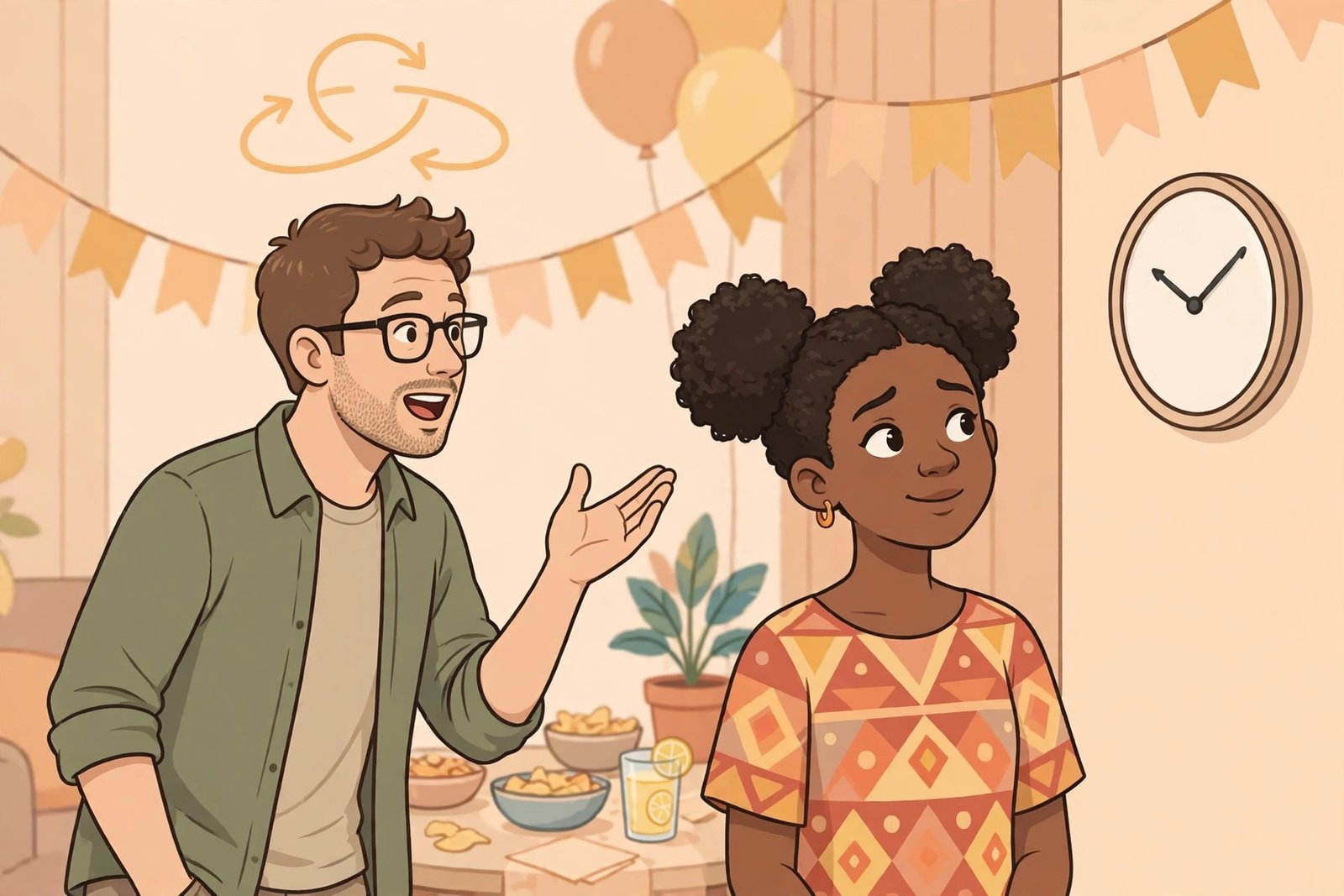
Exits are easy when you catch the moment early. Wait too long, and you’re not exiting a chat anymore. You’re escaping a hostage situation of politeness. So learn the early signs that a conversation is turning, the way you learn the smell of rain before a storm.
The first sign is the loop. The person tells the same story, point, or complaint for the third time, with no new piece added. Loops mean the chat has run out of fuel. The second sign is the stretch. Your answers shrink to “mm” and “yeah” while your eyes start touring the room. Your body has already left. Your mouth is just being polite about it.
The third sign is the drop. The topic slides somewhere that makes you uncomfortable. Gossip about a friend who isn’t there. Questions that are too personal. A joke that’s not funny to you. That stomach drop is information. Trust it early. And the fourth sign is time blindness. A chat you planned as two minutes is now fifteen, and the thing you actually came to do is still waiting.
Your own mood is a sign too. If you notice that you have started rehearsing exits in your head, sentence by sentence, the chat has already ended for you. Only the announcement is missing. That rehearsal feeling is useful data, not a character flaw. It means your social battery has a clear voice. Girls who listen to it early get out of a conversation that is turning awkward while they still have the warmth to do it kindly. Girls who override it for an hour have to get out of a conversation that is turning awkward with the last drops of their patience, and that is when goodbyes come out sharp.
Add one sneaky sign to the list. The compliment that traps. Someone showers you with praise, story after story about how great you are, and somehow leaving feels rude because they were being nice. Or its twin, the trauma pour, where a near stranger unloads heavy life details in minute three. Both floods feel impossible to exit, and both have the same key. Volume is not obligation. A person can be kind, or hurting, and you can still need to leave. You get out of a conversation that is turning awkward the same way in both floods. Warm, clear, gone.
Spotting the moment matters because a graceful exit needs about ten seconds of runway. When you can feel a chat dying, you can start your landing calmly. When you ignore the signs for twenty minutes, you end up fleeing mid sentence, and that is the exit people do remember. Girls who get out of a conversation that is turning awkward with style almost always started earlier than everyone thinks.
Your Body Can Start the Exit Before Your Mouth Does
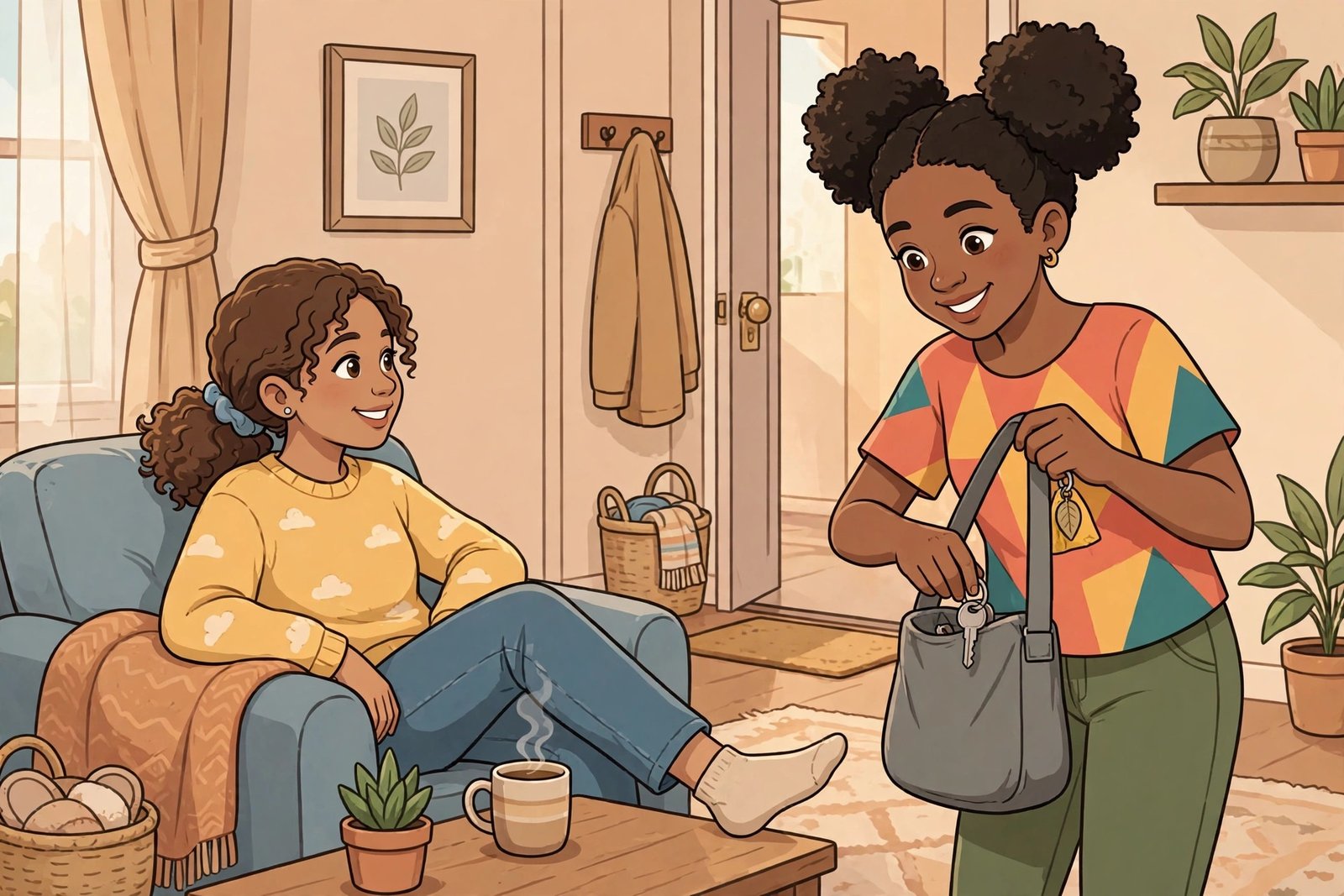
Words are only the last step of leaving. Your body can start the exit a full minute before you say a thing, and when it does, your goodbye lands as natural instead of sudden. Think of it as turning the ship slowly instead of yanking the wheel.
First, the angle. Turn your feet and shoulders slightly toward where you’ll go. People read feet like arrows. A body angled away says, kindly and silently, this is wrapping up. Second, finish your drink or gather your things. A girl holding her bag and keys is a sentence everyone understands. Third, if you’re sitting, stand. Standing is the universal sign for the end of a chat, and it works at parties, at school, and at your own kitchen table.
Eye contact changes too. In a warm chat, eyes stay locked. As you prepare to leave, let your gaze include the room. It tells the other person that your attention is already sharing itself with the rest of your life. None of this is rude. It’s the soft choreography every adult uses daily, and it makes the spoken line almost a formality.
Your voice can join the exit party too. As a chat winds down, your replies naturally get a touch shorter and slower. That is not you being cold. That is the rhythm of an ending, and the other person’s body hears it even if their mind is busy talking. A small closing tone on your sentences, the kind teachers use at the end of a lesson, tells both of you that the box is being packed. When you get out of a conversation that is turning awkward, these tiny signals stack up until the goodbye feels less like a jump and more like the last step of a staircase you were already walking down.
Here is the part girls miss. Your body signals protect the other person’s feelings. A sudden verbal goodbye can feel like a slammed door. A slow body exit gives them time to land their own story, finish their point, and feel heard. When I need to get out of a conversation that is turning awkward, I start with my feet, not my mouth. By the time I speak, the exit is already halfway done, and nobody feels dropped.
Exit Lines That Work at School
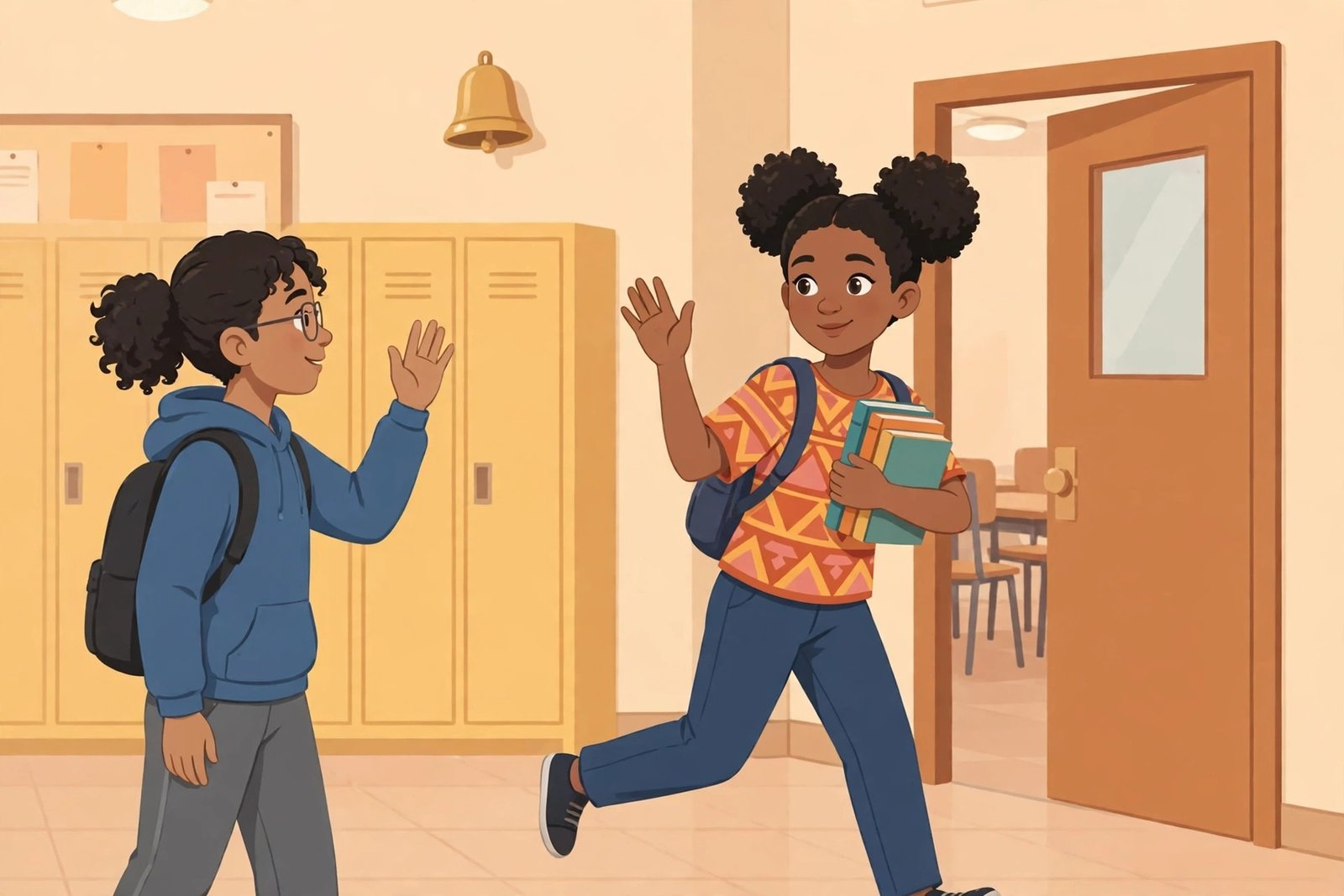
School exits have one special feature. You will see this person tomorrow. And the day after. So school lines must be warm, short, and built on true, checkable facts of the school day. The bell schedule is your best friend here. It gives you honest exits all day long.
For the hallway talker who is keeping you from class: “I have to run, my teacher locks the door at the bell. See you at lunch!” True, kind, and impossible to argue with. For the group chat that turned into gossip about your friend: “I’m staying out of this one, girls. I need the library before it fills up.” You leave the topic and keep your loyalty, both in one line. For the classmate who corners you daily with the same drama: “Walk with me? I have to drop this at the office.” Turning a standing trap into a moving walk often ends it at the destination, naturally.
Notice the shape of these lines. A warm scrap about them or the talk. A simple fact about you. A future hello promised. That three part shape is the whole technology. When you get out of a conversation that is turning awkward at school using that shape, you leave behind a person who feels fine about you. Tomorrow stays easy.
One more school setting, the sticky one. The teacher’s pet chat in front of a teacher, where leaving feels like it will be graded. Or the partner work that ended ten minutes ago but your partner keeps chatting while your other work waits. Use task exits there. “I need to finish my part before the bell. Talk at break?” Teachers respect it, partners accept it, and it has the bonus of being completely true. School is full of honest clocks and honest tasks. When you get out of a conversation that is turning awkward at school, the building itself hands you half your lines. Use them without a shred of guilt.
And what about the chat that’s not boring but hurtful? A girl pressing you about your body, your family, your grades? Skip the pretty shape. One clear line is enough. “I’m not talking about that. Let’s do something else, or I’m going to head off.” Said calmly, once. If she pushes again, head off. Boundaries said early are small. Boundaries said late have to be walls.
Exit Lines for Parties and Family Events
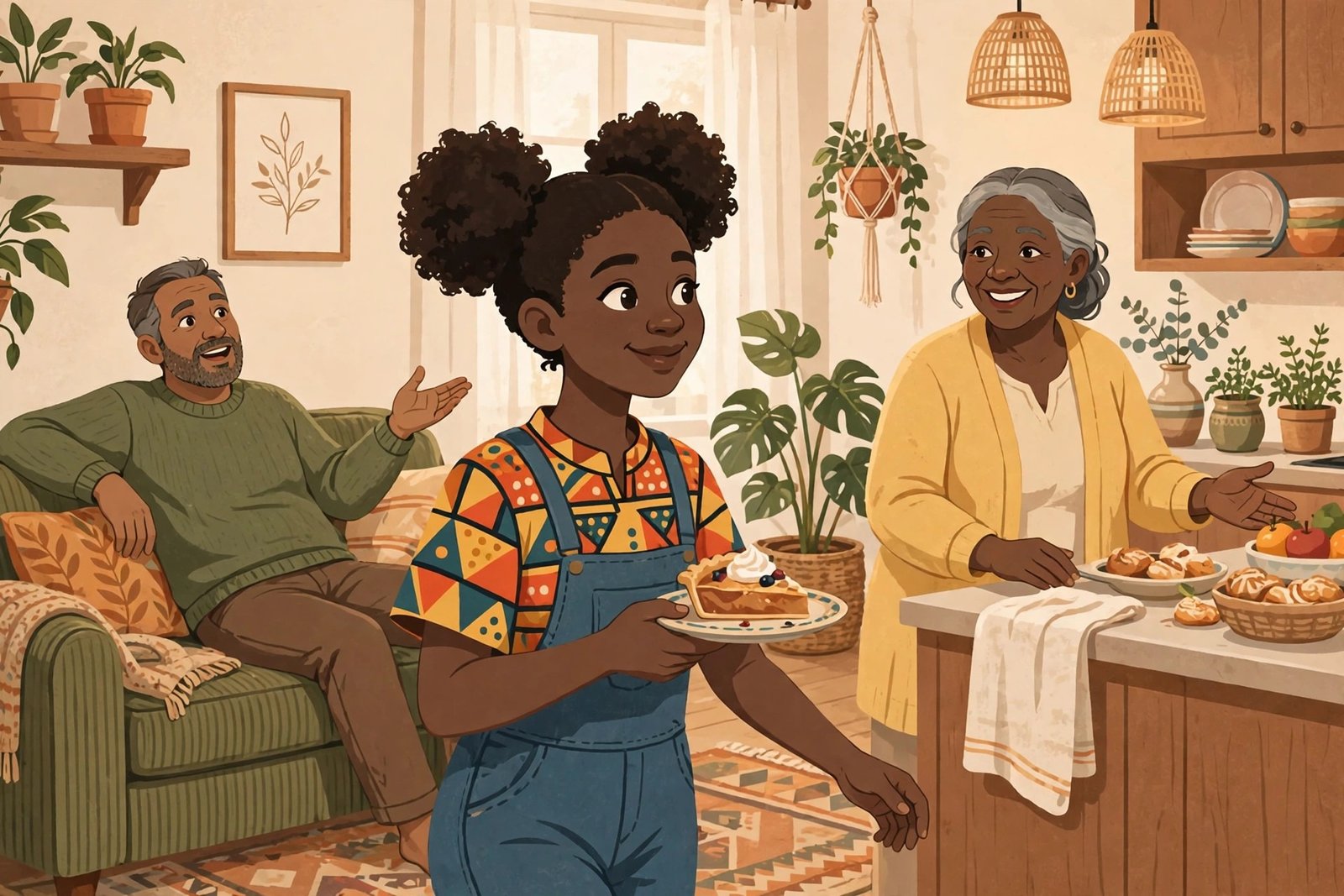
Parties and family events run on different fuel. There’s no bell to save you, the people are older or mixed in age, and some of them have known you since you were four. The good news is that these settings are full of built in exits, if you learn to see them. Food, drinks, hosts, music, and other guests are all doors.
The refresh line is the classic. “I’m going to grab some water. Want anything?” Half the time the chat simply does not restart, because the person finds a new partner while you’re gone. The host line is gold at family events. “I promised my aunt I would help her with dessert. Excuse me!” Helping is visible, kind, and blessedly long. The reunion line uses the crowd. “Oh, there’s Sara, I haven’t seen her in months. Come, or excuse me a second?” Either way, you’re moving.
Uncles with endless stories and neighbors with endless opinions deserve their own line, because they are hard to interrupt. Wait for any breath, then land this gently. “I love this story. Hold the rest for coffee, I have to check on my mom.” Warm, flattering, final. If you get out of a conversation that is turning awkward with an elder this way, you keep both the respect and the relationship, which matters at the next family event.
Music gives you one more lovely door at parties. When a song everyone loves starts, the room’s attention splits, and slipping away to dance, or to find your friends near the music, is the most natural exit on earth. Nobody has ever been offended by a girl leaving to dance to a song she loves. Plan around it if you can. Some girls keep half an ear on the playlist all evening, the way sailors watch the weather. When you get out of a conversation that is turning awkward on the arm of a favorite song, the exit feels like joy, not escape.
One caution. Don’t invent a fake phone call with your phone visibly dark in your hand, and don’t say you’re going to the bathroom six times in one evening. People notice. Small honest exits keep your reputation clean, and in family circles, reputation is forever.
Try One Subject Change Before You Leave

Sometimes the person is lovely and only the topic is dying. Your friend is stuck on a complaint loop about a teacher. Your cousin is deep in a game you don’t play. Before you exit the person, try exiting the topic once. A subject change is the polite first door, and it works more often than girls expect.
The bridge line is your tool. Grab one word from what they said and walk it somewhere new. “Speaking of exams, did you pick your options for next year?” Or use the setting. “This song! It was playing at the match on Saturday, did you go?” A good bridge feels like a gift, not a dodge. You’re offering the chat fresh air.
Watch out for the false rescue, though. A subject change into gossip is not a rescue. It is a trap with better lighting. If the new topic needs someone absent to be torn down, skip it and go straight to the exit. Also beware the change that only you care about, announced at full volume. Dragging your cousin from her favorite subject to your hobby in one hard yank feels like a small hijack. Bridges work when they start on their side of the river. That is why they work at all when you get out of a conversation that is turning awkward, or save it, with grace.
Give the new topic two honest minutes. If it breathes, wonderful. You just saved a conversation instead of leaving it. If it dies too, or slides back to the same loop, you have your answer. Now exit with a clean conscience, because you tried. Girls who get out of a conversation that is turning awkward after one fair subject change almost never feel guilty afterward. The attempt is what makes the leaving kind.
There’s a deeper reason to try this first. Small talk isn’t empty. It’s the warm up lap that lets bigger, realer talks happen later. We even wrote about why small talk matters more than you think, and it’s true. Some chats feel awkward at minute two and lovely at minute ten. Not all of them, though. The two minute test tells you which kind you’re in.
How to Leave Without Burning the Bridge
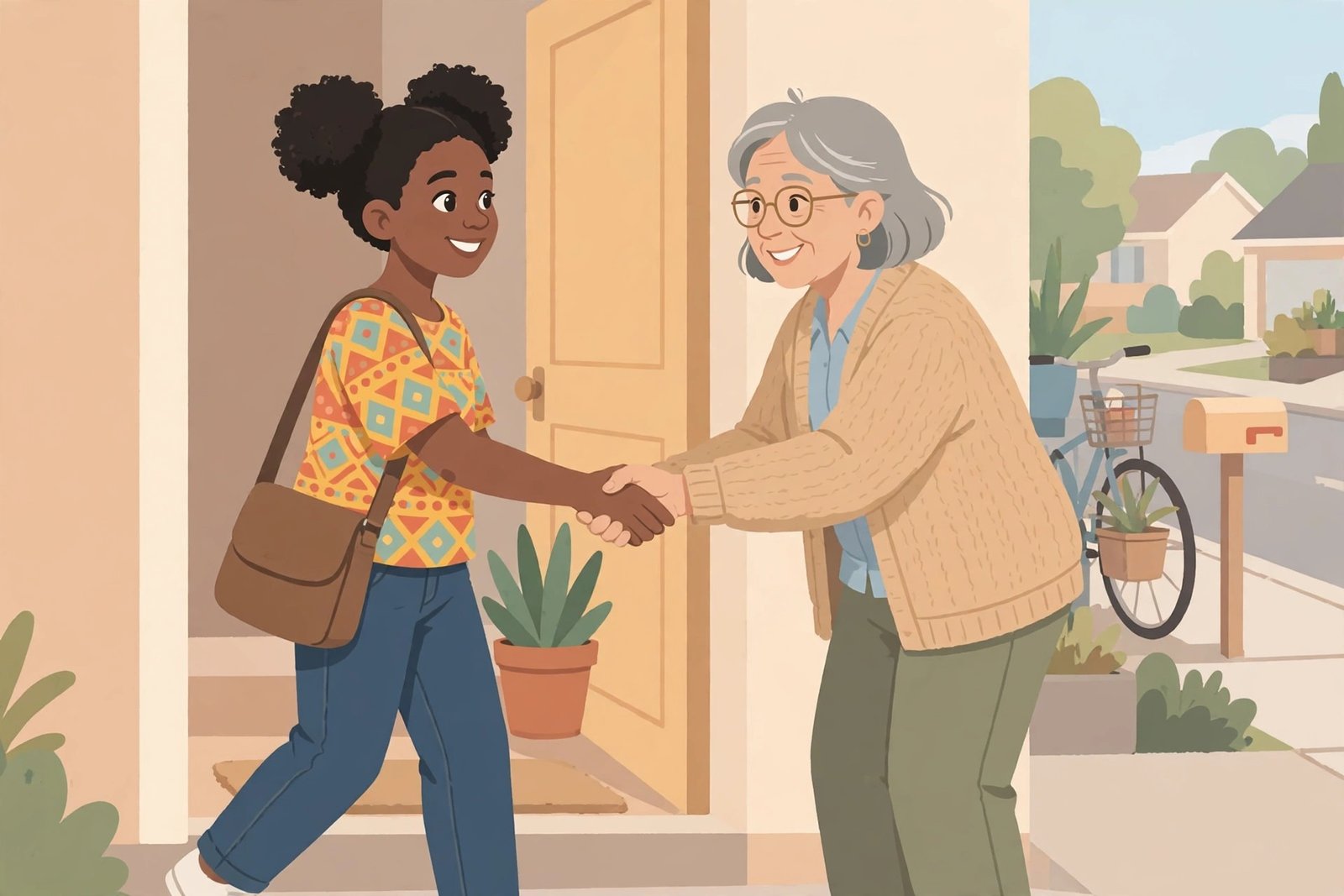
An exit has two parts. The leaving, and the echo. The echo is what the person feels about you after you walk away, and it decides whether your next meeting is easy or cold. Girls who master the echo can get out of a conversation that is turning awkward anywhere, with anyone, and stay liked. That is the real prize.
The echo is built in the last ten seconds. A quick warm summary is the strongest tool. “So glad you told me about the camp. It sounds amazing.” Summaries prove you listened, and people forgive any exit from a person who truly listened. Add a future hook when you mean it. “Tell me the rest on Friday.” Only promise what you want, though. A fake hook is a debt you’ll dodge later, and dodging reads as cold.
Here is a detail that separates kind exits from cold ones. Thank the person for something specific. Not a vague “thanks for chatting,” but the real item. The story about the dog. The tip about the exam. The photo they showed you. Specific thanks are proof of presence, and they travel with the person after you leave. “She actually listened,” is the echo you want. When you get out of a conversation that is turning awkward with a specific thank you in the goodbye, people describe you afterward as lovely, not distant. Lovely and free beats trapped and polite, every single time.
Then, the move itself. After your line, go. Don’t hover, don’t add three more sentences, don’t let the chat resurrect itself while you stand there half gone. A clean exit is a kindness to both of you. Lingering after goodbye is what makes it awkward. Say it, smile, walk. Your feet finish the sentence.
What if they follow you? It happens, especially with lonely or very talkative people. Stay kind and get specific. “I really do have to go now, my ride is here. Take care!” Specific facts close doors that general warmth cannot. And if you get out of a conversation that is turning awkward and still feel a pang of guilt in the car, remember this. You did not reject a person. You ended a time slot. Their worth was never on the table, and your afternoon is allowed to belong to you.
The University of Ottawa’s career centre shares a nice rule in its guide on ending a conversation gracefully: be honest, say what you enjoyed, and be decisive. No fake excuses. That rule was written for adults at work events, and it works word for word for a girl at a birthday party.
When the Awkward Topic Is Serious, Not Just Boring

Most awkward chats are just dying chats. But some turn awkward because something real arrived. A friend starts crying about her parents. A classmate shares something heavy about her health, her fears, her home. Your exit toolbox must change here, because leaving a person mid pain the way you leave a boring story would be cold, and you would feel it later.
Slow down instead of speeding up. Heavy topics don’t need your solutions. They need a witness for a few minutes. Sit, listen, and let the person land. If you truly must go, say so like it matters. “I’m really glad you told me. I have to leave now, but can we talk tomorrow at lunch? I want to hear the rest properly.” A promised return, kept, turns your exit into care instead of escape.
There is one more serious case to name. The chat that turns awkward because the person is pushing your limits on purpose. Pressing for secrets, for photos, for things you said no to. That is not a dying conversation. That is a test of your fence, and the exit there needs no warmth at all. One plain line. “I am done with this conversation.” Then leave, and tell an adult if it scared you. You never have to get out of a conversation that is turning awkward politely when the other person has stopped being polite first. Safety writes its own rules, and they are simpler.
Some topics are too big for you entirely, and that’s okay. If someone shares something about safety, harm, or a secret that scares you, the kind move is to bring an adult into it, with honesty. “This is bigger than me. Let’s tell someone who can actually help, and I’ll come with you.” That’s not betrayal. That’s love with a spine.
And for the talks that are serious but not emergencies, the planned, sit down kind, different skills apply entirely. Our article on how to have a difficult conversation without crying or shutting down is built for those. This one stays with the everyday craft. Most days, you just need to get out of a conversation that is turning awkward at a party, keep everyone’s dignity intact, and go find the people you actually came to see.
Frequently Asked Questions
Is it rude to leave a conversation early?
No. Leaving early is only rude when it’s done coldly, with a lie you can see through, or mid sentence while the person is sharing something that matters. A warm line, a quick summary of what you enjoyed, and real steps away is good manners everywhere on earth. Adults end chats early all day long, at work, at events, on the street. Nobody keeps score. What people remember isn’t that you left. It’s whether you left them feeling heard. That part is fully in your hands.
What if the person follows me or keeps talking?
Smile and get specific. General lines like “I should go” can be talked over. Specific lines cannot. “My mom is waiting in the car now” or “My class starts in two minutes, I have to run” close the door kindly and completely. If the person still follows, stop, turn, and make it a real goodbye, hand on the bag, full eye contact. “I really have to go now. Take care, see you soon!” Then go, and don’t slow down. Firm and warm beats vague and trapped, every time.
Should I lie about why I have to go?
Small social lies feel easy, but they rot fast. The bathroom excuse expires. The fake headache gets remembered when you’re seen laughing ten minutes later. Honest exits are almost always available. You’re getting a drink. You’re greeting the host. You want to catch a friend before she leaves. All true, all enough. When no honest reason exists, the simplest truth works too. “I’m going to mingle a bit. It was nice talking!” Wanting to move is a reason. It never needed a costume.
How do I exit a group conversation?
Groups are easier, because attention is shared and your exit is a smaller event. Wait for a laugh or a topic change, the two natural doors. Then one line to the whole group. “Girls, I’m going to grab food before it’s gone. Save my seat in the story!” Standing, smiling, gone. Nobody has to carry the goodbye alone, and the chat flows on without a hole. If the group is the problem, gossip or pressure, the same exit works. Don’t return to that circle later.
What if I have to see this person every day?
Then the echo matters more than the exit, so invest in the last ten seconds. Use the warm summary, promise only the future hellos you mean, and greet them normally the next day. A normal next day wipes out doubt about yesterday. People you see daily do not need long chats to feel close. They need steady, friendly micro moments. When you get out of a conversation that is turning awkward with a daily person this way, you protect both your afternoon and your tomorrow. That is the whole art.